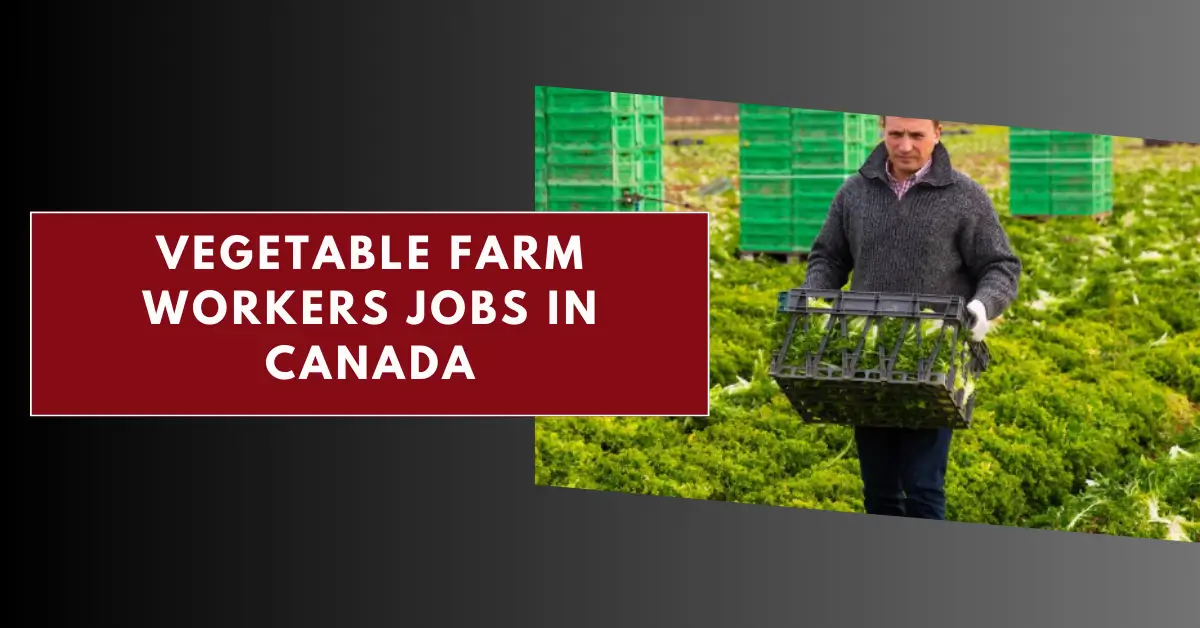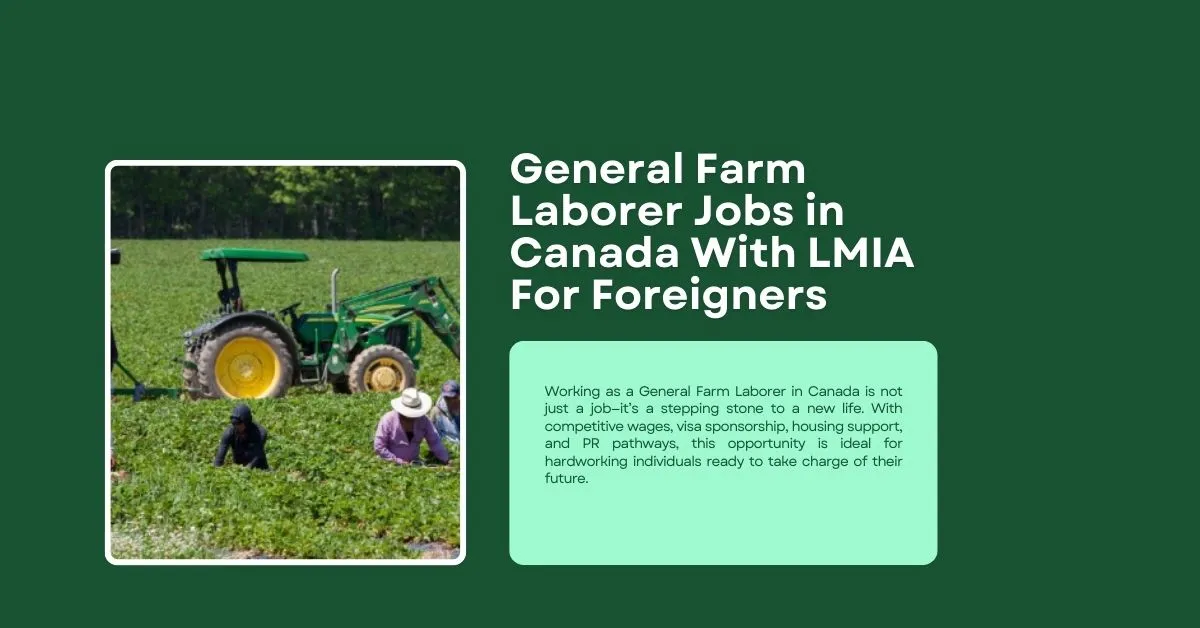
Imagine working in the fresh, open air of the Canadian countryside, building a stable future for yourself and your family. Canada’s agricultural sector, a cornerstone of the nation’s economy, is actively seeking dedicated individuals from around the world to fill essential roles as General Farm Laborers. This is a unique opportunity to legally live and work in one of the world’s most desirable countries, with no previous experience or formal education required.
Canadian farms offer more than just a job; they provide a secure pathway with government-approved LMIA visa sponsorship, a competitive wage of $14 to $17 per hour, and benefits like free accommodation. Whether you’re looking for seasonal work or a long-term career that can lead to Permanent Residency, your journey starts here.
Key Points:
- Job Title: General Farm Laborer
- Locations: Nationwide, including British Columbia, Ontario, Alberta, Saskatchewan, and Quebec.
- Employment Type: Seasonal (typically 6-8 months) or Full-Time.
- Work Hours: Minimum 30-40 hours per week, with opportunities for overtime.
- Salary: $14.00 – $17.00 CAD per hour (may be higher based on province and experience).
- Experience & Education: Not required. A strong work ethic and physical stamina are essential.
- Age Requirement: Must be 18 years or older. Employers often prefer candidates aged 18-45 due to the physical nature of the work.
Read Also: Fruit Picking Jobs in Canada With Free Visa Sponsorship
What is a General Farm Laborer?
A General Farm Laborer is a versatile worker who performs essential tasks across various types of farms. This role is physically demanding but requires no formal education or prior experience, making it accessible to many. Key responsibilities vary by season and farm type, including:
- Crop Farms: Planting, weeding, harvesting fruits and vegetables.
- Dairy Farms: Milking cows, feeding livestock, and cleaning barns.
- Livestock Farms: Animal care, fencing, and pasture maintenance.
- Poultry Farms: Collecting eggs, maintaining coops, ensuring hygiene.
- General Duties: Operating and maintaining farm machinery, irrigation, and packing produce.
The Importance of an LMIA:
A Labour Market Impact Assessment (LMIA) is a critical document. It is a government-issued approval confirming that an employer can hire a foreign worker because no suitable Canadian citizen or permanent resident is available for the job.
For you, an LMIA-approved job offer means:
- Legal Work Authorization: It is the foundation for your work permit application.
- Enhanced Visa Approval Chances: Applications with a positive LMIA are prioritized.
- Job Security: It ensures the employer and job meet government standards.
Always seek LMIA-approved positions to ensure a legitimate and secure immigration process.
Visa Pathways for Farm Workers:
Canada offers specific programs for agricultural workers:
- Seasonal Agricultural Worker Program (SAWP): For citizens of Mexico and participating Caribbean countries. Offers seasonal work permits for up to 8 months per year.
- Temporary Foreign Worker Program (TFWP) – Agricultural Stream: Open to applicants from all countries. Requires an LMIA-approved job offer.
- Agri-Food Pilot Program: A pathway to Permanent Residency (PR) for experienced, non-seasonal workers in specific industries like meat processing, mushroom production, and greenhouse farming.
- Rural and Northern Immigration Pilot (RNIP): A community-driven program that can lead to permanent residence for workers settling in participating rural communities, including those working in agriculture.
Key Benefits:
- Reliable Income: Competitive hourly wages with overtime pay.
- Accommodation: Many employers provide low-cost or free housing.
- Pathway to Permanent Residency: Programs like the Agri-Food Pilot offer a route to settle in Canada long-term.
- No Specialized Qualifications Needed: An ideal option for those without advanced degrees.
- High Demand: Canada’s agricultural sector consistently needs workers.
How to Apply For General Farm Laborer Jobs in Canada With LMIA For Foreigners?
Follow these steps to secure a farm job in Canada:
- Prepare Your Resume: Highlight any physical work experience, reliability, and a willingness to learn. Emphasize soft skills like teamwork and a strong work ethic.
- Find LMIA-Approved Jobs: Use official and reputable sources:
- Job Bank (jobbank.gc.ca): The Canadian government’s official job portal.
- Recruitment Agencies: Specialized in placing foreign agricultural workers.
- Submit Your Application: Apply online through the job posting. Ensure your resume is tailored to a farm laborer role.
- Interview Process: If shortlisted, you will typically have a phone or video interview to discuss your suitability.
- Receive Job Offer and LMIA: A successful candidate will receive a formal job offer and the LMIA document from the employer.
- Apply for a Work Permit: Submit your work permit application to Immigration, Refugees and Citizenship Canada (IRCC) using the job offer and LMIA.
Conclusion:
A general farm laborer position in Canada is far more than a temporary job; it is a launchpad for a new life. It offers a rare combination of immediate employment with a legal work permit, a fair wage with essential benefits, and a genuine opportunity for long-term settlement. The demand for hardworking, reliable individuals in Canada’s agricultural sector is constant and provides a secure and rewarding career path.
Frequently Asked Questions:
-
What is an LMIA, and why is it important for my visa?
An LMIA (Labour Market Impact Assessment) is a document from the Canadian government that proves an employer needs to hire a foreign worker because no Canadian citizen or permanent resident is available for the job. An LMIA-approved job offer is crucial as it significantly increases your chances of work permit approval and ensures the job is legitimate and government-vetted.
-
Do I need any experience or a university degree to apply?
No. This is one of the biggest advantages of these roles. There are no formal education or experience requirements. Employers value a strong work ethic, physical fitness, reliability, and a willingness to learn.